
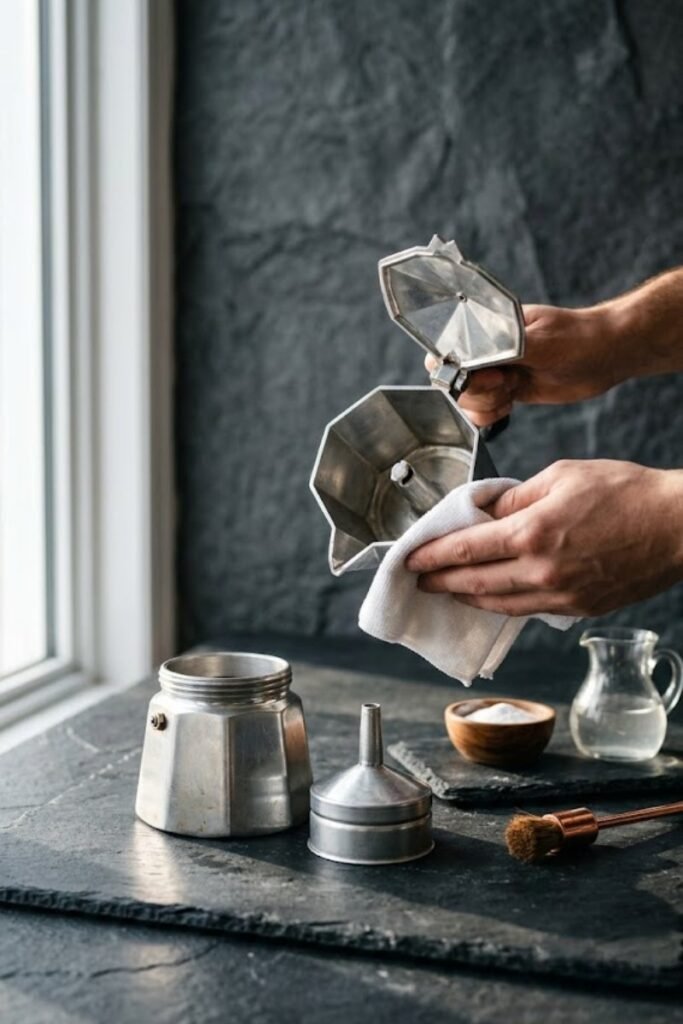
When I rinse out the bottom chamber of my metal brewer after a rich morning extraction, mastering how to clean and care for an italian moka pot is the absolute core step required to prevent your espresso-style coffee from tasting like burnt metal.
Over my years of monitoring steam pressure thresholds and managing raw aluminum vessels, I have treated oil crystallization and scale accumulation as serious metallurgical dynamics rather than basic dishwashing chores.
Whenever I see untrained home cooks chuck their octagonal coffee makers straight inside a screaming hot automatic dishwasher, it hurts the metal. Watching the brilliant silver finish dissolve into a dull, gray, and oxidized chalky layer that ruins the taste profile of your beans shows how bad maintenance habits destroy the equipment.
For me, delivering a true bar-quality stovetop espresso requires entirely abandoning high-heat automatic appliances, keeping your flexible rubber gaskets supple, and implementing an absolute bone-dry storage protocol. This continuous defense guarantees your internal valves function perfectly so every single extraction pours smoothly.
The Truth About Modern Liquid Soap vs. 1930s Lye
To understand why the common advice to never use soap on an Italian coffee maker is actually an outdated myth, you have to look closely at manufacturing history. When the aluminum stovetop brewer was invented, household soaps were made with real lye, a highly alkaline compound that aggressively eats away at raw aluminum surfaces.
Modern liquid dishwashing detergents are synthetic, pH-neutral formulas that will never pit or damage food-grade aluminum when used by hand. In fact, if you only rinse your pot with hot water, the residual coffee fats trapped inside the porous metal walls will oxidize and turn completely rancid over time.
This stale grease layer corrupts the flavor of your fresh coffee beans, adding a bitter, metallic taste to your morning cup. I balance these exact traditional equipment limits and fermentation checks every single morning when organizing my active pantry layout, an artisan baseline I track closely when managing unrefined grain cells inside my guide explaining What is a Biga? (The Italian Baking Preferment).
Without removing these stale lipid bonds completely with mild surfactants, the trapped oils form a sticky, dark residue that blocks the microscopic pores of your funnel basket. This grease buildup creates artificial friction against the boiling steam, forcing the pressurized water to over-extract the grinds and ruin your morning cup flavor.
Why Automatic Dishwashers Turn Silver Aluminum Pitch-Black
While hand-washing with mild liquid soap is perfectly safe, exposing a raw aluminum Moka pot to an automatic dishwasher is the single fastest way to destroy it. I follow the strict material testing data, chemical surface analyses, and appliance safety parameters documented inside the official Serious Eats Coffee Equipment Maintenance Manual to preserve my brewing assets cleanly.
Automatic dishwasher pods rely on highly concentrated alkaline salts that operate under intense, prolonged heat inside the closed washing chamber. This harsh chemical environment strips away the metal’s natural protective oxide layer within a single cycle, causing a severe chemical reaction known as aluminum oxidation.
Your beautiful silver brewer will exit the machine looking pitch-black, rough, and covered in a messy gray powder that rubs off on your fingers. This oxidized dust will continuously leach into your fresh brewing water, ruining your espresso shots and forcing you to manually scrub the metal with steel wool to restore the finish.
This intense industrial heat also dries out your internal safety elements, warping your soft rubber funnel gaskets until they crack under steam pressure. Once these structural seals degrade, the boiling water leaks straight out of the center screw thread, destroying your stovetop extraction pressure entirely.
Descaling Tough Calcium Scale Safely with Citric Acid
The final law for managing your espresso tool inventory requires executing a gentle, non-abrasive descaling session every three months to clear out stubborn mineral crusts. If you fill your bottom boiler chamber with standard municipal tap water, hard calcium deposits will slowly gather around the base of your copper safety release valve.
Never use raw, concentrated white vinegar to clear this scale, as harsh acids left sitting in a cold chamber will pit the aluminum walls and create deep pockets where mold can hide. Instead, dissolve one tablespoon of mild food-grade citric acid powder into a full boiler base of warm water, assemble the empty pot, and run a heating cycle on your stove.
The hot, diluted citric acid wash gently dissolves hard white calcium scale, clears clogged filter basket holes, and breaks down old grease deposits without attacking the metal. Dump the hot liquid down your sink drain, let the metal cool completely, and run two quick sacrificial batches of cheap coffee grounds through the pot to flush out any remaining citrus aromas.
Taking the extra five minutes to hand-dry your independent chambers and execute a gentle descaling run is the ultimate secret to keeping your Italian coffee table elite. This continuous mineral defense guarantees your pressure vaults remain completely pristine, delivering clean, un-polluted hot steam to your family dinner table for decades.